
Why N-Gram analysis matters for Google Ads optimisation
Thousands of search queries make search term analysis difficult to scale. N-Gram analysis groups themes across queries, helping you action previously hidden spend.
Look beyond individual search queries
Search query reports can contain thousands of terms, many with only one or two clicks. Reviewing them individually makes it easy to overlook patterns that become significant when viewed together.
Analysis of more than one million missing search queries across the Squared.io platform found that a third of spend over a 30-day period was on queries clicked just once. The data also showed CPC increasing as click volume increased, with CPA following the same trend.
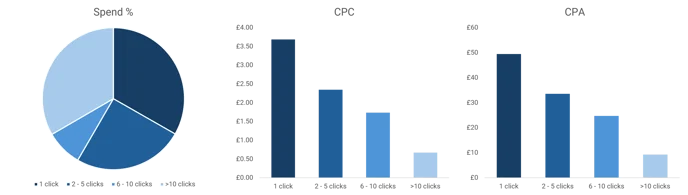
The takeaway: the long tail deserves attention, even when individual queries don't have enough data to stand out.
Find patterns hidden in the long tail
N-Grams group recurring words and phrases across multiple search queries, showing their combined performance. For example, instead of reviewing dozens of individual searches containing login, returns or customer service, you can identify the recurring theme and assess its overall spend and performance.
The same approach can reveal:
Irrelevant product terms
Poor-quality intent
Competitor themes
Recurring non-converting searches
Prioritise themes by impact
The value isn't just finding patterns, it's understanding which ones are worth acting on. Start with N-Grams showing:
High spend with no conversions or a negative ROAS/high CPA
This turns a potentially overwhelming search query report into a shortlist of themes worth investigating. Squared's N-Gram analysis can surface themes with negative ROAS or no conversions so teams can focus on the areas most likely to reduce wasted spend.
Analyse Search, AI Max and Performance Max together
N-Gram analysis is particularly useful when looking across campaign types. Performance Max can generate queries that aren't reviewed in the same way as traditional Search, while AI-powered matching can expand the range of searches entering your campaigns.
Looking at recurring themes across Search, AI Max, and PMax can reveal
Themes working well on one campaign type but under-performing in another - some themes might be best suited to Search rather than AI Max for example.
Themes not picked up by Search that should be excluded across PMax.
Valuable PMax or AI Max themes that could be added to your keyword strategy.
Squared combines Search and PMax query data, showing the combined performance of recurring N-Grams across both.
Decide whether to exclude, investigate or expand
Once you've identified a recurring theme, there are three main actions:
Exclude it if it consistently represents irrelevant or inefficient traffic.
Investigate it if performance or intent is unclear or inconsistent across campaign types.
Expand into it if it represents valuable demand that your current coverage isn't capturing.
This makes N-Gram analysis useful for both reducing wasted spend and finding new opportunities.
As search behaviour and automated matching continue to evolve, regular N-Gram analysis provides a scalable way to keep identifying new themes before they become a larger source of wasted spend.
How Squared.io helps
Squared.io's N-Gram analysis groups recurring words and phrases across Search and Performance Max queries, combining their performance data so teams can quickly identify themes driving inefficient spend.
You can drill into the underlying queries, understand where a theme is appearing, and identify opportunities to exclude, optimise or expand - without manually working through thousands of individual search terms.
For teams using Search, Performance Max and AI Max together, it provides a more scalable way to understand the search behaviour being captured by increasingly automated campaigns.

